Imagine finding an injured wild animal. It’s frightened, vulnerable and needs help. Your instinct is simple: rescue it, make it better and, when it’s ready, return it to the wild. But what if you legally can’t?
That’s the reality wildlife rescues can face when dealing with certain invasive non-native species.
There’s an important distinction between non-native and invasive. A non-native species is one that has arrived somewhere outside the area where it naturally occurs. Britain has thousands of non-native species, and most aren’t considered invasive.
An invasive non-native species is one that can spread and cause significant harm to native wildlife, habitats or ecosystems. And there are some surprisingly familiar names on that list.
Grey squirrels. Muntjac deer. American mink. Rose-ringed parakeets. Canada Geese.
Even plants such as Japanese knotweed can be invasive.
None of these species are evil. They’re simply surviving. And therein lies the problem.
Here at Hopefield, we have our own very special reminder of just how complicated this subject can be.
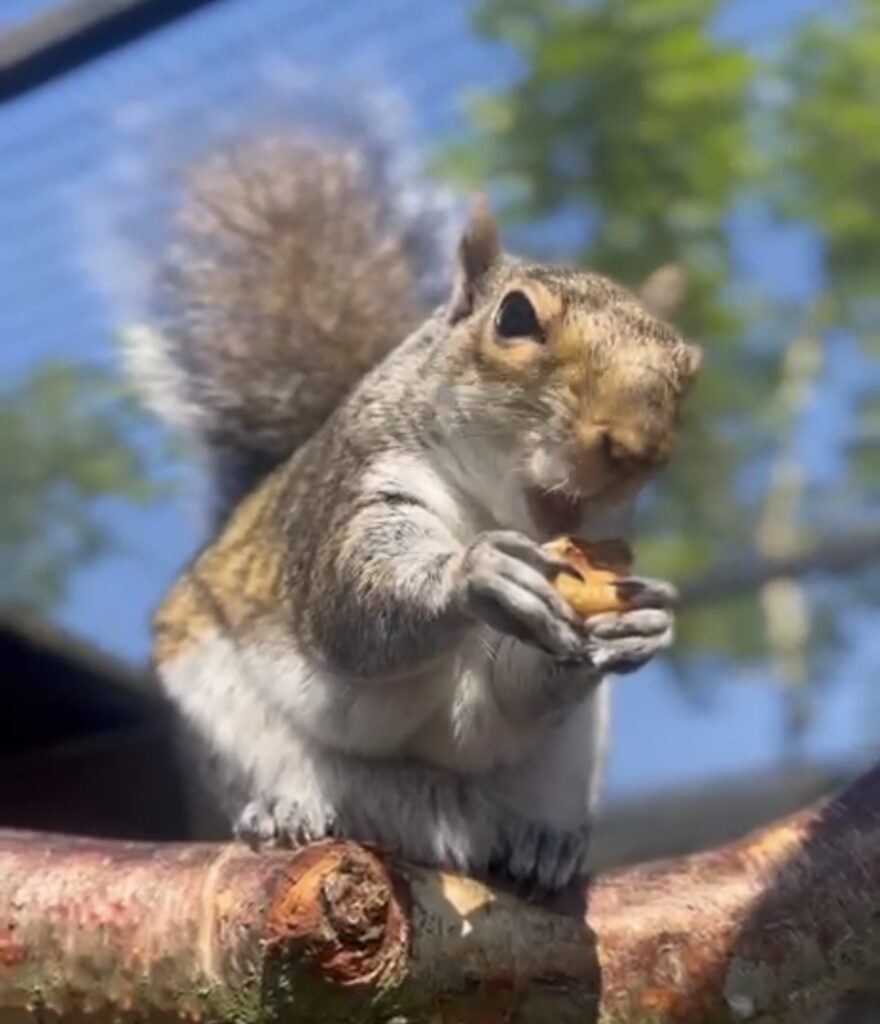
Hazel is a grey squirrel (and also one of the animals you can sponsor to help raise funds for her care). Hazel was handed into the sanctuary as a tiny baby – she had got confused and run up someone’s trouser leg. After spending some time with her it was clear that she must of been hand-raised and then released back into the wild where she would not have survived. Unfortunately it is illegal to release grey squirrels back into the wild and so the sanctuary had two options – put Hazel to sleep (which would never happen), or try and get a license to keep her. Luckily Hopefield was granted a license to keep her and now she lives in big outdoor enclosure where she can be happy and safe. When you visit the sanctuary look out for her because she loves attention!
Hazel was one of the lucky ones… Grey squirrels were introduced to Britain in the 19th century and have since become widespread. They compete with native red squirrels for food and habitat and can carry squirrelpox, which can be devastating to red squirrels. They can also cause damage to trees and woodland.
But Hazel doesn’t know any of that.
She isn’t an ecological villain.
She’s a squirrel.
And she is here because humans introduced her species to Britain in the first place.
This where things get uncomfortable. For most injured wild animals, the goal of rehabilitation is eventually to release them back into the wild. But grey squirrels are subject to invasive species legislation.
In England, a rescue centre can temporarily keep a listed invasive animal for up to six weeks without a license. Longer-term captivity requires the appropriate licensing and secure containment, and grey squirrels cannot simply be rehabilitated and released back into the wild.
The grey squirrel is probably the example most people recognise, but invasive species come in all shapes and sizes.
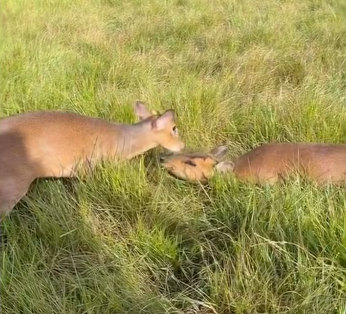
Muntjac deer can browse heavily on woodland vegetation.
American mink can prey on native wildlife and have contributed to pressure on water vole populations.
Signal crayfish can outcompete native white-clawed crayfish and spread disease.
Asian hornets pose a threat to native pollinators and are particularly concerning because of how quickly they can spread.
And then there’s Japanese knotweed, a plant capable of growing aggressively and damaging habitats and infrastructure.
The common thread isn’t that these species are “bad”. It’s that they can have consequences in an ecosystem that didn’t evolve alongside them.
This is where the conversation gets really difficult. On one side, there’s the individual animal. It is hurt. It needs help. On the other, there’s the wider ecosystem.
Releasing an invasive species can contribute to harm to native wildlife.
Both things matter.
And the animal caught in the middle didn’t choose any of it.
Humans moved species around the world. Sometimes deliberately, sometimes accidentally. We introduced animals, transported plants, released pets and altered habitats. Then, when some of those species established themselves, we found ourselves having to manage the consequences.
The animal didn’t create the problem. We did.
Prevention is the most important part. Never release unwanted pets into the wild. Think carefully before buying or keeping non-native species. Follow guidance around plants and animals, and take biosecurity seriously. And if you find an injured animal, don’t automatically assume that picking it up and taking it home is the right thing to do. Different species have very different rules and needs, so getting advice from an appropriate wildlife rescue or organisation is important.
Because sometimes the kindest thing you can do for wildlife is knowing when to intervene – and when not to.
There isn’t an easy answer, but it’s a question worth asking, because conservation isn’t always about choosing which animals we care about.
Sometimes it’s about trying to repair problems humans created in the first place – while making the kindest and most responsible choices we can along the way.
Hazel reminds us that the animal in front of us is never the whole story. She is a grey squirrel. She is also an individual animal who deserves care, kindness and a safe home. And perhaps that’s the challenge of conservation: learning to hold both things in our heads at the same time.
Protect the wildlife that belongs here. Care for the animals that need us. And remember that, more often than not, it was humans who started the problem in the first place.